
Slope: How to Survive Past the First Minute
Published · 2 min read
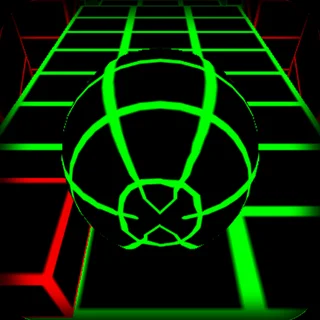
Almost every Slope run dies in the same handful of places. Watch a few and you see the pattern: a tunnel exit, a moving red block, or a drop where the ball was off-centre. None of those are hard in isolation. They are hard because by the time you meet them the ball is moving twice as fast as it was when you learned them. Here is how to get past them.
1. Stop looking at the ball
The ball sits at the bottom of the screen and the track scrolls towards it. If your eyes are on the ball you are reacting to what is already under it, and at speed that is too late. Keep your eyes a third of the way up the screen, where the next two or three obstacles are, and steer for those. The ball will follow; it always does.
2. Tap the keys
Slope's steering has momentum. A held key slides the ball across the whole track and off the far edge; a tap moves it about one lane and stops. New players hold, then over-correct, then hold the other way, and the ball ends up in the black. Play the first stretch with short taps only and notice how rarely you fall off the sides. Save a full hold for the wide, empty sections where you genuinely need to cross the track.
3. Do nothing on tunnel exits and landings
Two moments punish any input at all. The first is leaving a tunnel: the track inside is narrow and flat, the track outside is wide and cambered, and the ball needs half a second to settle onto the new surface. Steering during that half-second throws it sideways. The second is landing after a drop. If you were centred before the ledge, you will land centred; steering in the air only moves you off the landing zone. In both cases, hands off, wait for the ball to grip, then line up for the next obstacle.
The moving blocks
Red blocks that slide sideways move on a fixed rhythm. Do not swerve around them; watch the gap they leave and drive through it when it lines up with your lane. At high speed a swerve is worse than the block.
What a good run looks like
Twenty seconds is a first-day run. A minute means the three habits above have stuck. Past ninety seconds the speed is high enough that the leaderboard players are working on pure reading of the track, and the only way to improve further is repetition: the track is random, but the segments are not, and after enough runs you recognise each one by its first few metres.
More from the blog
- Slope 2, Slope 3, Slope City, Slope Tunnel: Which Sequels Are Worth Playing
The original Slope spawned a dozen follow-ups. Most add a shop and a skin; a few change the game. This is what each one actually does differently.